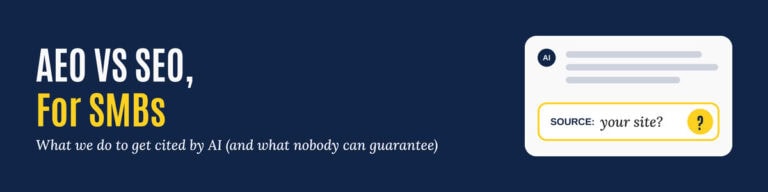
“How do I get my business into ChatGPT?” Nearly every business owner is asking this right now. Then the panic sets in and they ask, “AI killed SEO, so is my website even worth it?” If you’ve been pitched an “AEO package” (Answer Engine Optimization), or are wondering if you even need one, we’ve got your answers.
First, know that no one can guarantee you’ll show up in AI answers. Anyone who promises this is selling you something they can’t control. What you CAN do is build every page the way AI engines like to read and quote, and that work looks a lot like good SEO. (And if you need leads right now, SEO and AEO aren’t the strategy to get this. They focus on long-term growth, not instant leads)
Not sure where your site stands? Book a quick call and we’ll tell you honestly.
In this article we’ll walk through:
- What answer engine optimization (AEO) is
- The real difference between AEO and SEO
- Whether anyone can guarantee AI results
- What the traffic data says about “AI killed SEO”
- Whether SEO and AEO should be your plan for leads right now
- What we build into every page to get cited by AI
- What happens off your site that nobody fully controls
Over the last 15 years, our marketing agency has helped hundreds of small-to-medium-sized businesses manage SEO, and now we know how AEO vs SEO fits into a strategy that gets even better results. Let’s break down how we do this.
WHAT IS ANSWER ENGINE OPTIMIZATION (AEO)?
Answer engine optimization (AEO) is the work of making your content easy for AI tools to find, understand, and quote. You may also hear GEO being tossed around, which stands for generative engine optimization. This is the same AI tool, just with a different name. No wonder people are getting confused.
What exactly are “answer engines” though? They are AI tools that give you direct answers instead of a list of links that may or may not answer your query. The most popular answer engines right now are Google’s AI Overviews (the AI summary at the top of many search results), Google’s AI Mode (a chat-style search inside Google), and ChatGPT.
After managing SEO for over 15 years, we’ve noticed something about AEO: SEO and SEO share the same foundation. If a search engine can’t find, crawl, and trust your page, an AI tool that goes through all that search data won’t fare much better.
AEO VS. SEO: WHAT’S THE DIFFERENCE?
SEO (search engine optimization) aims to get your page ranked in the list of search results, so people click on the link. AEO aims to get your page used as a source when an AI writes an answer. Same raw material, different finish line. Here’s how that plays out in practice:
- The goal. SEO wants people to click on a link to your site. AEO wants AI tools to cite your website in their answers (and the click that sometimes comes with this visibility).
- The format. AI tools pull short, clear answers. A page that answers a question in the first sentence or two under a question heading is much easier to quote than one that buries the answer in paragraph six.
- The signals. Both care about whether your site is crawlable, fast, and trustworthy. AEO leans harder on what the rest of the web says about you (reviews, mentions, press), because AI tools pull from many sources at once.
So, do you need a separate AEO strategy? Not completely. A good AEO strategy is a good SEO strategy with a few extra habits baked in. This is the approach we’ve taken with our clients; we take the things we believe help with AI and bundle them into our SEO work. And since what people say works for AI keeps changing, we keep adjusting these strategies instead of selling it as its own magic product.
CAN ANYONE GUARANTEE YOU’LL SHOW UP IN AI ANSWERS?
No. And we won’t pretend otherwise.
Here’s why nobody can promise it:
- The models change. Google, OpenAI, and others update how their tools pick sources, often without telling anyone the details.
- Sources rotate. Ask ChatGPT the same question twice and you can get different sources. One day you’re cited. The next day, a competitor is.
- A lot of it happens off your site. Reviews, news mentions, and what other sites say about you all feed in, and you only control part of that.
So, when someone tells you, “We’ll get you into ChatGPT,” ask them how. If the answer is a secret trick, keep your wallet in your pocket.
What we will promise is that we do all the best practices we know, on every page, and keep updating them as we learn. Here’s a real example of how we do this:
We recently looked at the 10 largest local competitors for a client expanding into a new metro. Almost none of them were doing deep content on their sites. A few had some FAQs. Pretty much none had many reviews, testimonials, or proof. Social video was thin to nonexistent. All of this was hurting our client’s visibility, so we filled in the gaps.
When a whole local market is that quiet, a business that does the basics well has a real shot at becoming the source AI tools reach for. No guarantee. But much better odds.
IS AI KILLING SEO FOR SMALL BUSINESSES?
Not the way the headlines say. Organic traffic is down, but the losses are lopsided.
Kevin Indig, founder of the Growth Memo, is a growth advisor to companies like Meta and Airbnb. In his newsletter, he analyzed three years of Similarweb traffic estimates for 10,000 US sites and 10,000 sites in France. Here’s what he found in the US from August 2024 to August 2026:
- Organic search visits fell 13.2% overall. Real, but slower than the “SEO is dead” crowd claims.
- The typical small site in his sample was roughly flat (up 2.7%). Large sites lost far more.
- Publishers got crushed, losing 41.5% of their organic traffic. Their product is content, and AI answers compete with it directly. Health, food, and news sites also fell faster than average.
- Paid search traffic grew 21%. Google’s ads take up more of the page, and they eat some of the clicks that used to go to organic results.
- AI referrals are still tiny, about half a percent of total visits.
Indig is careful to say his data doesn’t prove what caused the drops. His title says it best: it’s not all AI. Ads and Google’s algorithm updates take a bite too.
So, if you’re a local contractor or service business, you’re not a recipe blog. People still search for a roofer, a plumber, or a lawyer and click to call. That doesn’t make you immune. It means “AI killed SEO” is the wrong reason to give up on your website.
AEO VS. SEO: SHOULD EITHER BE YOUR PLAN FOR LEADS RIGHT NOW?
No. If you need leads NOW, SEO and AEO aren’t the strategy. They’re long-term growth.
Good content, reviews, and a site AI tools can read all compound over time. Each month builds on the last. But none of it flips on next week, and nobody can promise when an AI tool will start citing you.
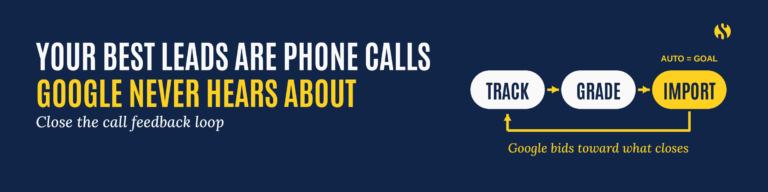
For near-term leads, we lean on paid search (Google Ads and Local Services Ads, and making sure Google hears about your phone leads and on the basics that turn calls into jobs, like answering the phone fast. Then SEO and AEO build the foundation that keeps leads coming when you’d rather not pay for every click.
HOW DO YOU OPTIMIZE FOR AEO? WHAT WE BUILD INTO EVERY PAGE
This is the part you can use today. Here’s what we build into our posts and pages to help them get found, read, and cited by AI:
- A plain-text intro that says who, who, and what. Every introduction says who we are, who the post is written for, and what it covers. AI tools (and humans) know right away whether the page answers their question.
- The big idea up front. The main answer goes near the top, in plain words. Don’t make anyone (or any bot) dig for it.
- Question headings with direct answers. H2s are written as the questions people really ask, and the first sentence under each one answers it.
- An FAQ in every post. Short questions, short answers. These are easy to quote, and they match how people type questions into ChatGPT and Google.
- Definitive language. “AEO is…” beats “AEO could potentially be considered…” every time. Hedged sentences are hard to cite.
- Clear entities. Name the things you’re talking about: your business, your city, your services, the tools and brands involved. Vague pages are hard to place.
- Certain sentence structures. Short, complete sentences that still make sense if someone lifts one out on its own.
- An easy reading level. We aim low (around a middle-school grade level). Plain language is easier for people to read and easier for AI to summarize.
- Scannable formatting. Short paragraphs, bullets, and clear headings.
- Topic clusters. We build sites around groups of related pages on one topic, so the site shows real depth instead of one lonely page.
- A site AI can reach. We make sure sites can be found and read by AI tools in the first place. If a crawler can’t get to it, nothing else on this list matters.
One thing to watch: cheap, bare-bones pages that skip SEO won’t be AEO-ready either. If the foundation isn’t there, there’s nothing for the AI layer to sit on.
Want a second set of eyes on how your site stacks up? Book a quick call with our team and we’ll take a look.
WHAT HAPPENS OFF THE PAGE THAT YOU CAN’T FULLY CONTROL?
A lot of what AI tools use to decide who’s legit lives off your website. That’s where the “no guarantees” part comes from. There are steps you can take to improve your chances this way though, such as:
- Reviews and proof. Real reviews and testimonials tell people (and AI tools) that you’re a real business doing real work. They also take time. You need business to get reviews, and reviews to get business.
- Mentions and press. A local news interview or a press release in the local paper helps people see you’re a real player in your market. That kind of attention does double duty: it builds trust with people and it helps your AEO.
- Official site signals. Keep your business name, address, phone, and services the same everywhere they show up online.
These steps are good for SEO and AEO as they help prove your business’ authority in your field. However, other strategies to improve your business’ visibility offsite aren’t as timeless.
On October 15, 2026, Google announced updates to AI Mode and AI Overviews, including more inline links inside AI answers and a test of a dedicated section that highlights official websites at the top of some responses. Translation: Google wants to send people to clear, official sources. Make sure your site is one.
READY TO FIND OUT IF AI CAN FIND YOU?
SEO and AEO are how you build leads for the long haul. If you need leads this month, that’s a paid search conversation. Either way, book a call with our team. We’ll check whether AI tools can find and read your site, show you where your content and proof are thin, and give you a clear plan to raise your odds of getting cited. No “guaranteed ChatGPT rankings.” Just the real work.
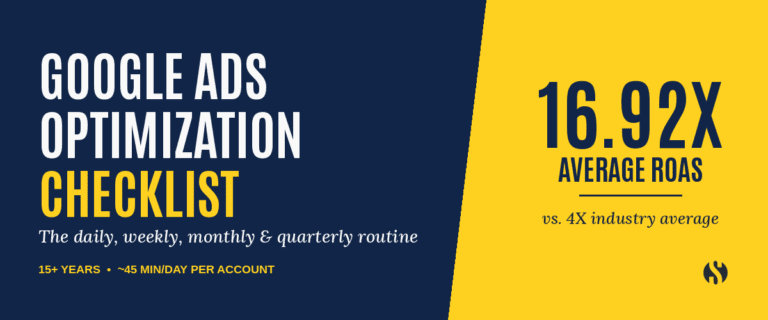
If you run Google Ads too, here’s what keeping an account healthy takes: What It Takes to Get 16.92X ROAS in Your Google Ads.
FREQUENTLY ASKED QUESTIONS
What is AEO?
AEO stands for answer engine optimization. It’s the work of making your content easy for AI tools like Google AI Overviews, AI Mode, and ChatGPT to find, understand, and quote in their answers.
What is the difference between SEO and AEO?
SEO aims to rank your page in search results so people click it. AEO aims to get your page cited as a source inside an AI answer. They share the same foundation, so strong SEO is the base of any AEO strategy.
How do AI search engines choose which sources to cite?
The companies don’t publish the full recipe, and it changes often. Clear answers, trusted sites, crawlable pages, and what the rest of the web says about you (reviews, mentions, press) all play a part.
How can I get my website cited in Google AI Overviews and ChatGPT?
Answer real questions clearly near the top of your pages, use question headings, add an FAQ, write in plain language, make sure AI tools can crawl your site, and build reviews and mentions off your site. Nobody can guarantee a citation, but these steps raise your odds.
Why do I rank #1 on Google but never get cited by AI?
Ranking and citation aren’t the same. AI tools often pull short, quotable answers from several sources. If your page buries the answer or doesn’t match how people phrase the question, a lower-ranked page with a cleaner answer can get cited instead.
Do ChatGPT and AI Overviews use different sources?
They can. Each tool has its own way of finding and picking sources, so you might show up in one and not the other. That’s one more reason to focus on fundamentals that help everywhere.
Is GEO the same as AEO?
Yes, for practical purposes. GEO (generative engine optimization) and AEO describe the same goal: getting your content used in AI-generated answers.
Is SEO dead because of AI?
No. Organic traffic is down overall, but Kevin Indig’s Oct 2026 analysis of 10,000 US sites found the typical small site roughly flat, while publishers lost about 42% (41.5% in the US). Ads and algorithm updates take clicks too, not only AI.
How long does SEO or AEO take to bring leads?
AEO is long-term work, not a quick fix. The content, reviews, and site work compound over time, and nobody can promise a date when AI tools will start citing you. If you need leads this month, paid search is the faster lever.
Enjoy content from Strategy Marketing? Make us one of your preferred sources on Google.