First ChatGPT came for the writers. Now it looks like it’s coming for graphic designers too. On March 25th OpenAI announced a new feature release for their 4o model – image generation. We’ve played with it and it’s (almost) as good as OpenAI claims. It has photo realism, stylized cartoons, updating images after generation, and more. This has people wondering: will AI image generation replace graphic designers?
In short, we don’t think so. In this article we’ll take you through:
- What the new AI image generation features can do,
- What ChatGPT images can’t do right now,
- And how this tool will change the graphic design world (because it will).
Let’s dive into what AI can do by talking about an example that has the internet buzzing: replicating art styles.
What AI Can Do
It boils down to two simple words: copy and combine. As Studio Ghibli discovered last week, AI can copy any art style and mass produce new images using it. A quick Google search will show you millions of your favorite memes, celebrities, and locations rendered in the style pioneered by Hayao Miyazaki and his team. Of course, you can just boot up ChatGPT and have it reproduce any image you like in a ‘Ghibli-fied’ version. But think, if ChatGPT can generate images in one style then it can do it in others. Any art the model has used as training data it can reproduce. It could make you into a Banksy or a Van Gogh or any other artist. But what does this have to do with graphic design?
AI image generation doesn’t just have to be for fun. Already people are using AI images and videos to crank out new ads, promotional videos, website graphics and more. Anyone with $200 and a free afternoon can generate thousands of images in any style and with any topic conceived (so long as it doesn’t violate the AI model’s content limits). Here are a few examples that we made in less than 10 minutes while working on this article:


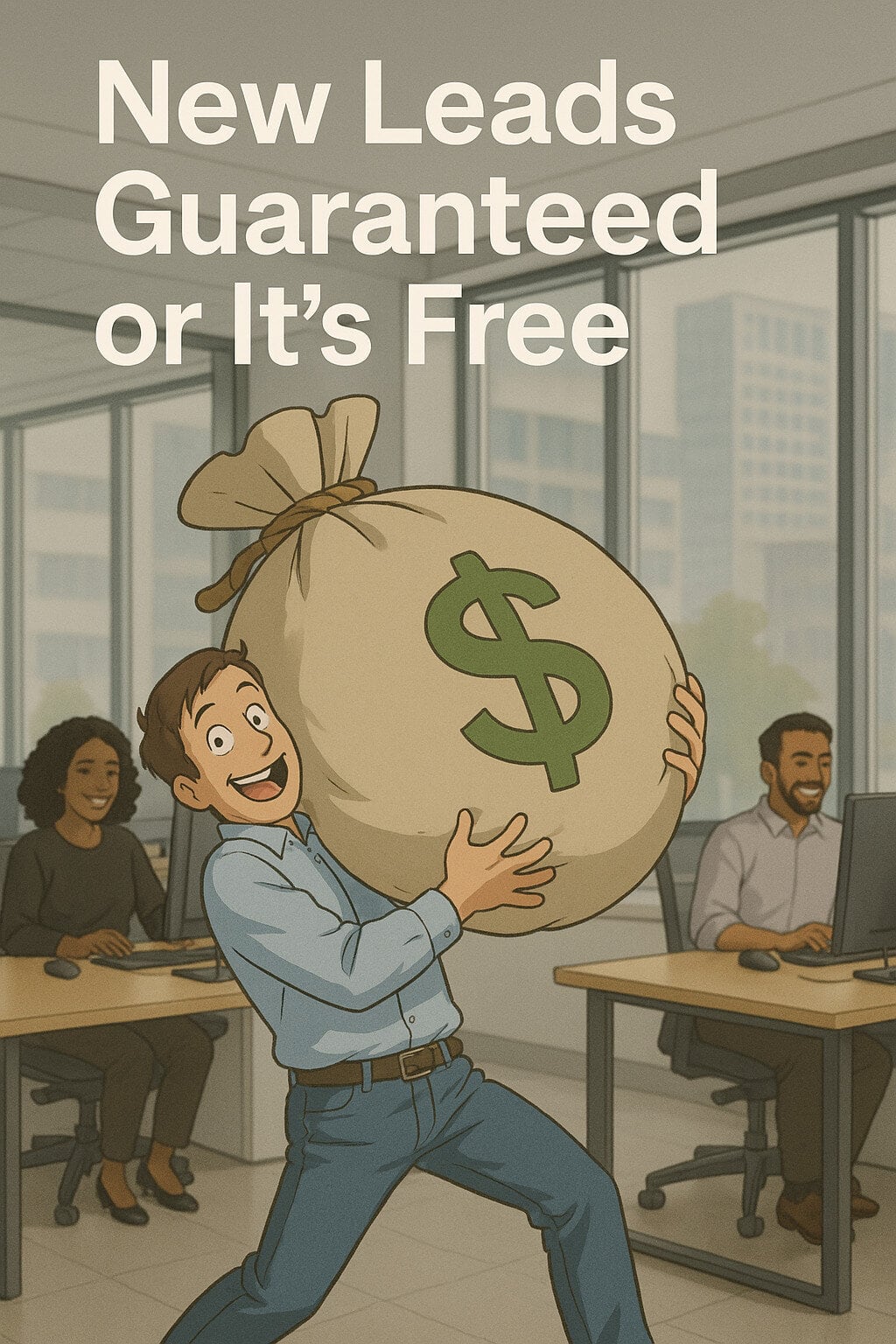
So, pretty grim news for graphic designers, right? Maybe not. The images above obviously aren’t perfect. Even though AI can generate new images and clean text, the current model has its limits.
What AI Can’t Do
There’s more missing here than the platitudes you’ve heard before about human creativity and innovation. Fundamentally, prompting the AI is a skill. Translating the idea in your head into a word prompt which outputs the exact thing you imagined from the AI is nearly impossible. As an example, imagine ‘a farm with a red barn, green house, blue truck, and a field full of cows’.
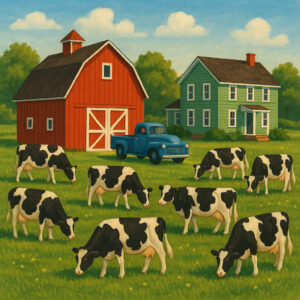
Is this what you envisioned? It wasn’t for me and probably wasn’t for you either. So, the first thing AI image generation can’t do is get things exactly right.
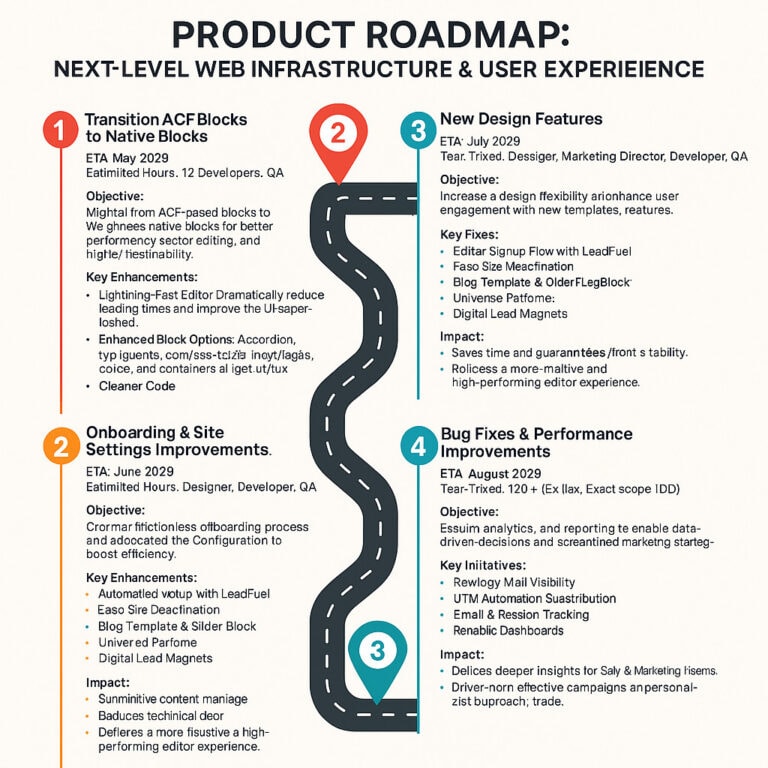
Next is certain functional uses. We tried to make a roadmap graphic using AI to convey a set of information. After a few prompts here’s the best it could do:
Now, here’s what our in-house designer made in under an hour:
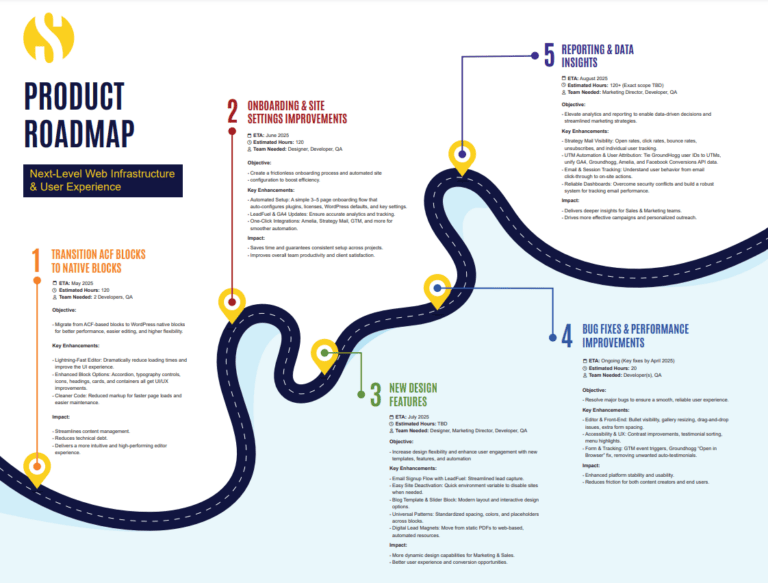
Obviously there’s a world of difference here. ChatGPT could not figure out how to align the road and the content. Also, with that much written content it stopped being able to render all the words clearly. In fact, it omitted an entire section of content because there was too much information for it to present.
Think back to the Studio Ghibli AI image example. Sure, anyone and their dog can now make a still frame in Ghibli’s style. How many of those people can string the frames together to create even 30 seconds of film? Would you be able to prompt the AI to do it correctly? Plus, movies, ads, and videos are far more than just the picture on the screen. Think of the other skills required. Script writing, lighting, voice over, music, animation – the full list could fill a hundred pages. What we’re really asking here is: who has the ability to use the correct tools to create art? Because that’s what marketing, sales, story, and graphic design are all about. They merge art with business for the benefit of everyone.
How AI Will Change Graphic Design (and Most Other Industries)
In the roadmap graphic example, our graphic designer made a version in just under an hour. But, she didn’t make it on her own. Here’s the key takeaway from this piece: AI won’t replace the good people, it will only make them better.
When making an animated movie, there are different kinds of animators. Two major types are key frame animators and their understudies who do the ‘in-between’ frames. The ‘key frame’ is the image to represent the start or end of an action. These are the most important frames of the piece. Only the best animators do the key frames because they are so important. The understudies handle all the ‘in-between’ frames. These frames don’t need to be as polished or high-quality because they move in a blur to connect the two key frames. Okay, why does this matter?
AI is your understudy now. Whatever your role, graphic design or otherwise, you only need to do the ‘key frames’ of your position. Working on a graphic? Have AI generation the pieces you arrange into final composition (hint – that’s how the road in our graphic was made). Working on a website? You write the outlines of the pages and have AI fill in the details. AI gives humans the ability to do their best work, to put 95% of their effort into the ‘key frames’ in their lives, and outsource the stuff they don’t like doing the AI.
Stay Current On AI and Marketing
Find this article helpful? Join our newsletter to learn when we publish new posts and get exclusive content! Sign up here:
"*" indicates required fields
Enjoy content from Strategy Marketing? Make us one of your preferred sources on Google.